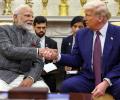
India should convert the Trump threat to an India opportunity, re-embracing a more liberal trade regime as a way of reviving manufacturing output and exports.
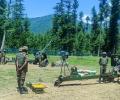
India fully utilised its military modernisation budget in 2024-2025 -- the first time in five years -- and signed a record Rs 2 trillion defence contracts.

'We are too important to want to be paired with Pakistan but too intensely connected to it to successfully detach ourselves,' asserts Aakar Patel.

The Budget has given signals that India is sensitive to the US needs and willing to walk the extra mile, but if need be, we should respond in equal measure as a sovereign nation, notes Ajay Srivastava.
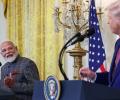
Of Trump's reciprocal tariffs and trade deals
The "weaponisation" of economic activity - through tariffs and sanctions - is now a reality, with countries leveraging these tools strategically, External Affairs Minister S Jaishankar said at the Raisina Dialogue recently.
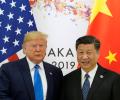
'If you compare the data from 2017 and 2023 of the US imports from the world and China, you will see that the US was a complete loser in the trade war, and China was a complete gainer.'
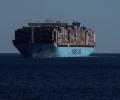
Adani Ports and JSW Infrastructure, India's leading private port operators, are expanding their logistics services to capture extra cargo while they run integrated transport services. "With incrementally less availability of lucrative port assets that can drive cargo volumes, port operators have naturally shifted their focus on deriving value in the upstream integration, i.e., the logistics space.

The government has revised gold import data, bringing down numbers for November by $5 billion to $9.84 billion, possibly to rectify double accounting of inbound shipments. According to revised data of the commerce ministry arm Directorate General of Commercial Intelligence and Statistics (DGCIS), gold import numbers have been slashed since April 2024, revealing excess imports of about $11.7 billion during the first eight months of 2024-25.
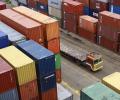
The US Trade Representative noted that India's average applied tariff rate stood at 17% per cent, the highest of any major world economy.
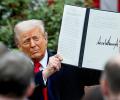
India needs another shot of difficult reform, of the kind only possible at gunpoint. Mr Trump holds that gun to our heads now. A drastic reduction in tariff protection, other elements of sarkari wet-nursing will force entrepreneurial India to become competitive again, argues Shekhar Gupta.
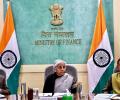
The Budget assumes significance as it comes on the back of lower-than-expected growth numbers during the second quarter and geopolitical uncertainty.

The government on Monday scrapped 30-month old windfall profit tax on domestically-produced crude oil and on export of jet fuel (ATF), diesel and petrol following a decline in international oil prices. Minister of State for Finance Pankaj Chaudhary tabled a notification in Rajya Sabha scrapping the levy on crude oil produced by firms like state-owned Oil and Natural Gas Corporation (ONGC) and exports of fuels done by companies like Reliance Industries Ltd.
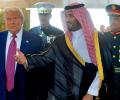
Acutely conscious that he's left with less than four years to create his legacy, Trump is undoubtedly a man in a hurry, observes Ambassador M K Bhadrakumar.

Simplifying investment policies at the micro level and introducing a time-bound framework will be critical for India's growth targets, notes Krishna Ella.
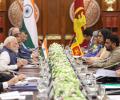
Prime Minister Narendra Modi received a tri-services ceremonial welcome in Colombo, Sri Lanka, marking the first time such an honor has been bestowed upon a foreign leader. The welcome took place at the historic Independence Square, the venue for national day celebrations. Modi's visit comes as Sri Lanka shows signs of recovery from a recent economic crisis, with India playing a significant role in providing assistance. During the visit, both leaders are expected to discuss a range of issues, including defense cooperation, energy, and digital initiatives.
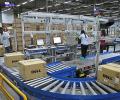
A task force set up by the Ministry of Electronics and Information Technology (Meity) for transforming India into an "electronic and semiconductor products" nation is on the verge of finalising its report, which is likely to recommend an allocation of Rs 44,000 crore between 2024 and 2030 to support homegrown companies in their quest to develop products and build global brands. The task force's recommendations include significant incentives: Rs 15,000 crore dedicated to electronic products (systems), Rs 11,000 crore for semiconductor products, and Rs 18,000 crore for various other incentives such as talent development, common infrastructure, logistics, and technology & IP (intellectual property) acquisition, a member of the panel revealed.

In a significant policy shift aimed at boosting agri-productivity and rural prosperity, Finance Minister Nirmala Sitharaman on Saturday announced six new agricultural schemes while increasing the subsidised Kisan Credit Card loan limit to Rs 5 lakh from the existing Rs 3 lakh, benefiting 7.7 crore farmers, fishermen, and dairy farmers.
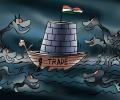
Indian exporters shipping goods to Israel may face higher insurance premiums and shipping costs due to the Israel-Hamas conflict, according to experts. Israel witnessed a surprise and unprecedented multifront attack by air, land and sea by the Hamas militant group, which rules the Gaza Strip, in its southern parts on Saturday morning. The International trade experts said the conflict may reduce the profits of domestic exporters but will not impact trade volumes unless war escalates.
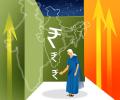
Indian economy to grow at 6.3-6.8 pc in FY26, against 6.4 pc in FY25

'The scrapping of import duty would help Indian companies compete in international markets, thus paving the way for India becoming a space manufacturing hub for the world.'

Finance Minister Nirmala Sitharaman on Saturday announced six new schemes and increased the subsidised Kisan Credit Card (KCC) loan limit to Rs 7 lakh from Rs 5 lakh, targeting everything from unemployment to crop productivity enhancement across the country. Presenting her eighth budget speech in Parliament, Sitharaman positioned agriculture as "the first engine of growth" and unveiled the Prime Minister Dhan-Dhaanya Krishi Yojana, a flagship program targeting 100 agri-districts grappling with low productivity, moderate crop intensity, and below-average credit parameters.
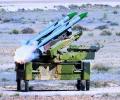
'When one air force (India's) hits the other's airbases with impunity and that air force (Pakistan's) is not able to respond, then the air force, which has put the other's airbases out of commission, has won.'
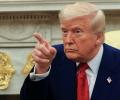
Trump's sweeping tariffs and penalties on China-built ships have turned global shipping into the front line of economic war, observes Shyam G Menon.
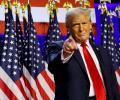
American President Donald Trump has announced imposing reciprocal tariffs on its major trading partners including China that levy higher import duties on goods shipped from the United States. He has already announced a 25 per cent duty on steel and aluminium imports, which will come into effect from March 12.

The government's initiative to migrate SEZ data from NSDL software to ICEGATE system for streamlined reporting of import data caused double counting of gold imports, resulting in inflated figures and the issue has now been largely rectified, government sources said. The downward revision has provided the actual picture of trade deficit (difference between imports and exports), which was earlier looking very high. The deficit for November will now be revised downwards from $37.84 billion to about $32.8 billion. Similarly, there will be a revision in overall import numbers as well.

Putin is keen on establishing a good personal rapport with Trump and anchor a meaningful US-Russia partnership, realistic enough to accept that Trump is as good an American president as Russia would ever get, observes Ambassador M K Bhadrakumar.
Recent documents by NITI Aayog and periodic labour force surveys on employment show that the importance of agriculture is rising in the Indian economy.

With Donald Trump all set to become US president, Indian exporters may face high customs duties for goods like automobiles, textiles and pharmaceuticals if the new US administration decides to pursue the 'America First' agenda, opined trade experts. Experts also said that Trump could also tighten H-1B visa rules, impacting costs and growth for Indian IT firms. Over 80 per cent of India's IT export earnings come from the US, making it vulnerable to changes in visa policies.
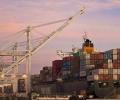
Exports declined for the fourth-consecutive month by 10.3 per cent year-on-year to $34.98 billion in May, while the trade deficit widened to a five-month high of $22.12 billion. According to the data released by the commerce ministry on Thursday, key export sectors recording negative growth include petroleum products, gems and jewellery, engineering goods, ready-made garments of all textiles and chemicals. Imports also declined 6.6 per cent, six-month in a row, to $57.1 billion against $61.13 billion in the same month last year, the data showed.
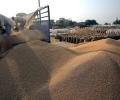
T Nanda Kumar, former food and agriculture secretary, shared his memories of working with former prime minister Manmohan Singh during some of India's most challenging times, highlighting Singh's compassionate leadership and commitment to ensuring food security for all Indians. Kumar recalled Singh's steadfast support during the 2008 global food crisis, where he championed a ban on non-basmati rice exports to secure domestic supplies. Singh's leadership, characterized by intellect and humility, left a lasting impression on Kumar, who considered him a mentor and guiding light.

'If Pakistan's army wants to escalate violence in Kashmir, they have an unlimited supply of jihadis they can train and send. That's not an issue for them.'

The country's exports are expected to contract by 5.8 per cent and imports by 11.3 per cent during the second half of the current financial year, though implementation of several measures by the government would help support exports going forward, according to the Economic Survey 2021. With gradual recovery of economic activities, the survey said that imports and exports have picked up. During the first half of 2020-21 (April-September), exports dipped by 21.31 per cent to $125.25 billion while imports declined by 40 per cent to $148.69 billion.

The escalation in the diplomatic row between India and Canada will not have an impact on the bilateral trade and investment ties between the two countries, government sources said on Tuesday. They also said that the bilateral trade value is not significant and Canadian funds can route their investments through Singapore, the UAE and the US. "India is a preferred investment destination," they said.

Given the high priority accorded to the manufacturing sector, several policy initiatives around the theme of Atmanirbhar Bharat have been set in motion to address its competitiveness and growth. Some notable examples include the PLI scheme and the employment-linked incentive scheme announced in the recent Union Budget. The Budget also announced the setting up of 12 industrial parks under the National Industrial Corridor Development Programme (NICDP).

The most striking features of this Budget was its focus on simplification and improving the ease of doing business in India, asserts Kaku Nakhate.

For India to transform into a high-income country with a projected gross domestic product (GDP) of $23-35 trillion, will need a sustained annual growth of 8 per cent to 10 per cent. This will be powered by India's demographic dividend, technological innovation, and sectoral transformation, according to the "India@2047: Transforming India Into A Tech-Driven Economy" report by Bain & Company and Nasscom. By 2047, the services sector is expected to contribute 60 per cent of India's GDP, while manufacturing will account for 32 per cent, both playing a pivotal role in economic expansion.

Maruti Suzuki India on Tuesday reported a 28 per cent rise in exports at 263,068 units in 2022, its highest ever overseas shipments. The company's previous highest exports was achieved in 2021 with 205,450 units. The highest exported models in 2022 were Dzire, Swift, S-Presso, Baleno and Brezza, the company said in a statement.
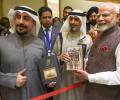
Prime Minister Narendra Modi met two Kuwaiti nationals who translated and published India's two iconic epics, Mahabharata and Ramayana in Arabic during his two-day visit to Kuwait. Modi, who praised their work, said it highlights the popularity of Indian culture globally. His visit to Kuwait is the first by an Indian prime minister in 43 years.
Countries negotiating free trade agreements (FTAs) need to keep in mind eight "myths" which surround these pacts, like they lead to accelerated increase in exports and promote domestic manufacturing, according to a report by think-tank GTRI. The report by Global Trade Research Initiative (GTRI) claims to dispel these 'myths', including that FTAs weaken the WTO (World Trade Organisation), countries are rushing to do FTAs, and these pacts promote investment and lower prices. It is "erroneously" believed that most world trade happens through the FTA route, but in reality, it is less than 20 per cent, said the report titled 'FTAs: Fabulous, Futile, or Flawed?'.
 © 2026 Rediff.com - Advertise with us - Disclaimer - Privacy Policy - Sitemap - Feedback - About us - Terms of use - Grievances